Marias High School Requires Students to Take Latin or Greek Classical Art and
As the only doctoral program in the country dedicated to the exploration of human experience through the interdisciplinary and multicultural report of myth, ritual, organized religion, literature, depth psychology, and fine art, the Mythological Studies Program cultivates scholarship, self-inquiry, and imagination in those who seek to understand and express the depths of the psyche. The program operates on the underlying assumption that myth has the power to touch our deepest creative energies and to generate symbolic images that confer significance upon the complexity of modern life and history. Myth thrives on paradox, ambiguity, and the shape-shifting means that metaphor informs and transforms our lives. Cultivating the mythic imagination leads to cocky-revelation and a profound and dynamic understanding of cultures—both of our own and others. The curriculum as a whole is animated by two basic questions: How is this cloth meaningful to me in my life and work, and how is information technology meaningful to the world within which I live? The sequence of form work provides a sustained inquiry into the various mythologies of the earth, situating them in the global context of the postmodern earth. Throughout the program, students engage in the close reading of classic works of world literature, including Homer'southward Odyssey, the Greek tragedies, the Hebrew Bible, the Ramayana and Mahabharata, the medieval grail legends, and fairy tales. The rituals and contemplative practices of religious traditions are investigated along with mythic and archetypal aspects of modern literature, contemporary events, and popular culture. Several methods of scholarly estimation are taught with a special emphasis on the hermeneutical approaches of depth psychology.
Patrick Mahaffey, Ph.D. and Cadre Kinesthesia member explains Mythological Studies at Pacifica
- Myth@pacifica.edu
- (805) 879-7305
- Request a call
At the cusp of a paradigm shift in which outmoded mechanistic, reductive modes of thinking are existence replaced by more complex, reanimated worldviews, the study of myth, story and fable has an exciting new relevance. The study of myth with its storehouse of narratives and images can help guide us by facilitating our personal and collective transition into a more vibrant reality. Myth reveals the unconscious narratives of both past and present, making the study of myth vitally important to our time. Issues of organized religion and violence, sexuality, the sacred and the secular, all co-mingle in the tapestry that comprises mythological studies. Guided by internationally recognized scholars, authors, and educators, Pacifica'south Mythological Studies Program invites students to sympathise the mythological, folkloric, and archetypal structures of the stories that play out in many dissimilar arenas all around usa—religion, popular culture, politics, the environs, and the arts. The program explores new means to detect and report the mythic and folkloric motifs revealed in current events, tell stories in ways that bring consciousness to of import issues and events, and mentor others in the power of storytelling to transform and renew culture.
Research is sustained through course work sequences that investigate:
- Similarities and differences that may be discerned within and betwixt African Diaspora and indigenous traditions, Hinduism and Buddhism, and Judaism, Christianity, and Islam.
- Courses that begin with the classics and progress toward contemporary and postmodern re-visionings in literature, film, music, and art.
- Personal evolution courses on dreams, visions, and myths; memoir and autobiography.
- Depth psychological courses devoted to the perspectives of Sigmund Freud, C. Yard. Jung, Marie-Louise von Franz, James Hillman, and Joseph Campbell.Research courses on theoretical approaches to the written report of myth, ritual, philosophy, methods, and contemporary issues in religious studies, and dissertation writing.
Students consolidate their learning through a sequence of special topics courses taught past alumni who utilise their training in their professional careers as well as by distinguished faculty members from other Pacifica programs. Mentoring throughout matriculation on the program is available from core faculty members. 2 journals provide students with opportunities for publication in academic and creative writing. The curriculum is farther augmented past an annual colloquium lecture given by distinguished guest scholars—such as Maria Tatar (Harvard University), Jeffrey Kripal (Rice Academy), and Yvonne Chireau (Swarthmore College)—who accost disquisitional issues in the study of myth and contemporary civilisation. Graduates of the program enrich their personal and professional lives through the transformative ability of myth. Alumni utilize their degree in a range of professions such as education, psychology, healthcare, the arts, filmmaking, religion, business concern, politics, law, and community and environmental affairs.
Programme Goals
The program'southward curriculum is designed to help students achieve half-dozen primary learning objectives or goals that are distributed across four domains of the curriculum:
The program is designed every bit an integrated 1000.A. and Ph.D. sequence with courses in 4 areas of study:
Mythology and Religious Traditions
- Translate the primary myths and rituals of a variety of religious and cultural traditions.
Myth and Literature
- Interpret the mythological and archetypal aspects of literature.
Depth Psychology and Culture
- Critically use the hermeneutics of depth psychology.
- Translate the mythic themes and dynamics that are nowadays in contemporary events and popular culture.
Research and Scholarly Writing
- Critically evaluate and utilize scholarly approaches.
- Critically evaluate cultural assumptions, especially those pertaining to diversity.
Students in the Mythological Studies Programme:
- Investigate mythologies and cultural traditions through the lenses of religious studies, literature, and depth psychology.
- Find recurring mythic themes in classic and contemporary literature, ritual, theater, art, music, film, and philosophy, and explore their cultural, sociopolitical, and historical contexts.
- Uncover the common patterns in man life throughout much of history and the varied ways human beings live and brand meaning of their experience through the report of various cultural mythologies.
- Appoint in the transformative experiences of deep reading, scholarly and creative writing, and generative discussions that accelerate our personal mythology in relation to communities and culture.
Mythological Studies Programme Benefits:
- Personal and professional enrichment and transformation catalyzed by the deep engagement with the power of mythological imagery.
- The spiritual and intellectual growth that comes from studies in the liberal arts and the humanities.
- An agreement of the multicultural multifariousness represented by the earth'south great traditions of mythology, literature, and organized religion.
- A deep appreciation of the importance of mythology in the history of art, music, and philosophy.
- A dynamic engagement with the archetypal energies of the dream, seen through the lens of the depth psychology of Freud, Jung, Hillman, and Von Franz.
- Enhancement of the fundamental skills of writing, deep reading, and inquiry.
- A profound understanding of the cultural mythologies of Egypt, Greece, Rome, the Native Americas, Islam, Hinduism, Buddhism, Christianity, Alchemy, and Judaism.
- An understanding of gender and sexuality in mythological studies.
- An understanding of the complex interrelationships betwixt Psyche and Nature.
- Intimate cognition of the canonical works of Classical, American, European, and World Literature.
- An understanding of the sustained power of myth in gimmicky art, music, literature, and film.
- An understanding of the mythological dimension underlying gimmicky events and history.
What Yous Tin Do With A Mythological Studies Degree
Graduates of the plan enrich their personal and professional person lives through the transformative ability of myth, developing highly advanced and universal skill sets useful in a broad range of professions such as pedagogy, psychology, healthcare, the arts, moving picture-making, religion, concern, politics, law, and community and environmental affairs.
Our alumni include:


Janet Bubar Rich, Ph.D. (2010)
Janet Bubar Rich is a Lath Member of the Crohn's and Colitis Foundation, Greater Los Angeles Chapter, and author of several books and book chapters. Dr. Rich, through her writing and speaking, hopes to nourish the imagination every bit she delves into the mythic sense of everyday life, offering connections that assist us run across life's challenges with marvel, confidence, meaning, and ease. Her publications include Riding on Horses' Wings, Hestia: Goddess of the Hearth, and Exploring Guinevere's Search For Authenticity In The Arthurian Romances.

William Linn, Ph.D. (2015)
Will Linn, Ph.D., Is the Executive Director of the Joseph Campbell Writers' Room and Chair of General Education at Global Studio Institute, where he teaches courses on myth and story. He is the co-host of a radio series he created for the Santa Barbara News-Printing called Mythosophia, Editorial Managing director for the Joseph Campbell Foundation'southward global Mythological RoundTable® network, and founder of The Mythology Aqueduct. He holds a B.A. in Philosophy from Sewanee, The Academy of the S, and a Ph.D. in Mythological Studies with an emphasis on Depth Psychology from Pacifica Graduate Plant. His areas of concentration include origin stories of cognition, mythic storytelling, and cosmological "psychles."
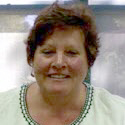
Susan Chaney, Ph.D. (2015)
Susan Chaney is Academic Dean at Southwest Acupuncture Higher. Her doctoral dissertation explored how want is a motivator for private change and growth. Her interdisciplinary arroyo included mythological studies, religious studies, depth psychology, neurobiology, culling healing, and motion arts, and presented practices that integrate the heed, body, and emotions through conscious awareness and the body'due south natural senses.
Mythological Studies Scholarship Programs
The Joseph Campbell Scholarship Fund is for the M.A/Ph.D. Mythological Studies Programme. A number of the scholarships are offered to newly admitted students in the Mythological Studies Plan based on farthermost financial hardship, academic merit, and content of essay.
Source: https://www.pacifica.edu/degree-program/mythological-studies/
0 Response to "Marias High School Requires Students to Take Latin or Greek Classical Art and"
Post a Comment